Dont find yourself in hot water!
Thinking about installing one of those modern instantaneous hot water heaters into your kitchen some which can supply cold, hot, or boiling, or even sparkling drinking water?
Then you should be aware that the building regulations impose strict safety requirements that have been put in place to protect residents in homes and employees in workplaces, from scalding and potential explosion because of a system malfunction.
There are many such devices now on the market, which are connected to the mains water supply and discreetly hidden away in kitchen units under or close to the sink. In workplaces these water heaters may be fitted over the sink and often supplement the hot water tap.
These type of water heaters are taking over from the traditional electric kettle as they can reduce or remove clutter from worktops as well as saving time waiting for water to boil.
What do they look like?
They might be like the following diagrams.
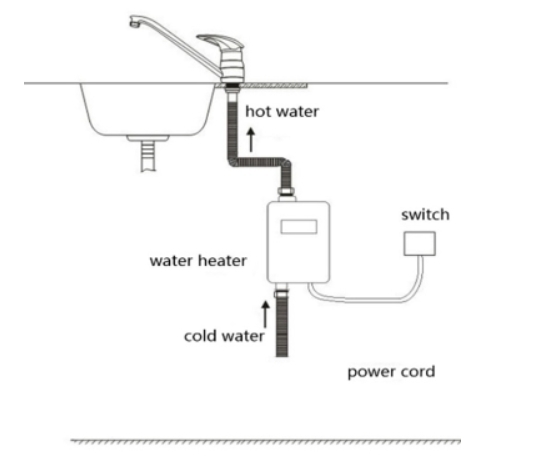
Figure 1: Under sink
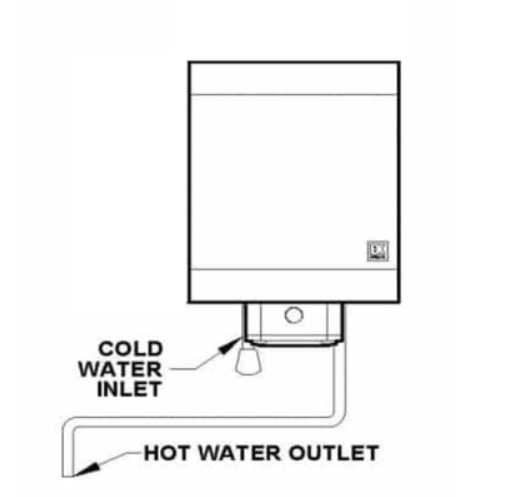
Figure 2: Over sink
What rules apply?
Under the building regulations these types of heaters are referred to as a controlled service or fitting and to which in this case Part G of the regulations apply in relation to hot water supply.
When installed in a new building or extension or as part of a change of use, the control of these devices will be a matter for Building Control to consider and might form part of the inspection process.
In an existing building, where the appliance or device is being retrofitted, the installation remains controlled, but it might not be notifiable work. This means that whilst Building Control don't need to know about the appliance or device being installed, the work must still comply with the requirements of the building regulations, namely requirement G3(2) and (3) of Schedule 1 and Regulation 7(1).
Requirement G3(2) states A hot water system, including any cistern or other vessel that supplies water to or receives expansion water from a hot water system, shall be designed, constructed and installed so as to resist the effects of temperature and pressure that may occur either in normal use or in the event of such malfunctions as may reasonably be anticipated, and must be adequately supported.
Requirement G3(3) states A hot water system that has a hot water storage vessel shall incorporate precautions to:
- (a) Prevent the temperature of the water stored in the vessel at any time exceeding 100C; and
- (b) Ensure that any discharge from safety devices is safely conveyed to where it is visible but will not cause a danger to persons in or about the building.
Regulation 7(1) states Building work shall be carried out:
- (a) With adequate and proper materials which
- (i) are appropriate for the circumstances in which they are used,
- (ii) are adequately mixed or prepared, and
- (iii) are applied, used, or fixed so as adequately to perform the functions for which they are designed; and
- (b) In a workmanlike manner.
What to watch for?
The principal areas to be cautious about are:
- Will the storage vessel hold water at a temperature of more than 100oC? If yes, this might not comply with the building regulations.
- Will the device include and be installed with safety features to allow the storage vessel to safely discharge boiling water/steam to the outside without the buildings occupants/employees being harmed or causing an explosion because of the appliance malfunctioning? If not, this might not comply with the building regulations.
- Will the appliance have a storage capacity of 15 litres or more? If the device/appliance can hold/store more than 15 litres of hot or boiling water, then the work is both controlled and notifiable. Only those appliances that have a water storage capacity of 15 litres or less and having an electrical supply that is also exempt from building regulations notification, are exempt from having to be notified to the local council about their installation.
- Will the appliance be fitted in a workplace? If so the appliance controls/outlet should be located so that it can be accessed/used by disabled persons. The electrical installation must also comply with the Electricity at Work Regulations'.
What else should I know?
The important thing to remember is that all hot water storage devices regardless of the volume of water stored are controlled by the Building Regulations. Whether the installation is notified and approved by the local authority building control team depends on:
- If the volume of stored water is more than 15 litres; and
- If the electricity supply to the appliance is exempt from notification as well for example, the appliance is connected by way of a three-pin plug socket.
All relevant requirements of the building regulations will apply to any building work; however, the following are particularly relevant to the provision of a hot water storage vessel:
- If an appliance installation is notifiable this can be done by submitting a Building Notice, or depositing an Application for building control approval for full plans with your Local Council under regulations 12, and 13 or 14; or by employing an installer who can self-certify the installation through their registration with an appropriate (one that caters for installers of hot water storage vessels) Competent Persons Scheme, in accordance with regulation 20 and Schedule 3.
- If new water supply pipework or electricity cabling is necessary, the routing should be in accordance with Requirements A1 and B3. See Approved Documents A and B for more details in England or Wales.
- Fittings need to be installed in accordance with the Water Supply (Water Fittings) Regulations and water supplier requirements. See Approved Document G (Requirement G1) for more details in England or Wales.
- The installation should be in accordance with Requirement G3. See Approved Document G for more details in England or Wales.
- In some modern dwellings particularly those that have been constructed to a Wheelchair Accessible standard in England and in workplaces in England or Wales, the controls for using the appliances should comply with Part M. See Approved Documents M4(3) England and M1 England or Wales for more details.
- Electrical installations in dwellings should comply with the requirements of Part P. See Approved Document P for more details in England or Wales.
Disclaimer:
Every care has been taken to ensure that the above content is correct at the time of publication. Any reliance on the content should be verified by the dutyholder(s) and their professional advisers. It is the responsibility of the dutyholder(s) and/or person carrying out the work to ensure compliance with the relevant building regulations and associated legislation.
This content is given in good faith by LABC. It is not definitive, and compliance will be a matter for the relevant building control authority to decide as the enforcing body for the building regulations, and ultimately for the appropriate tribunal or court to determine.
TT_26.1
This article was originally published on the LABC website on 24/11/2022. View the original article.


